

Find the buildings and the land the listing services never show
MAIA finds every multifamily parcel in a county that fits your buy box, from a 12-unit building to a 15-acre assemblage, then resolves the person behind each owning LLC and where to mail them. Multifamily teams use it to turn a county into one owner list before the first letter goes out. Outbound starts from every owner in the market, not from the ones a broker already called.
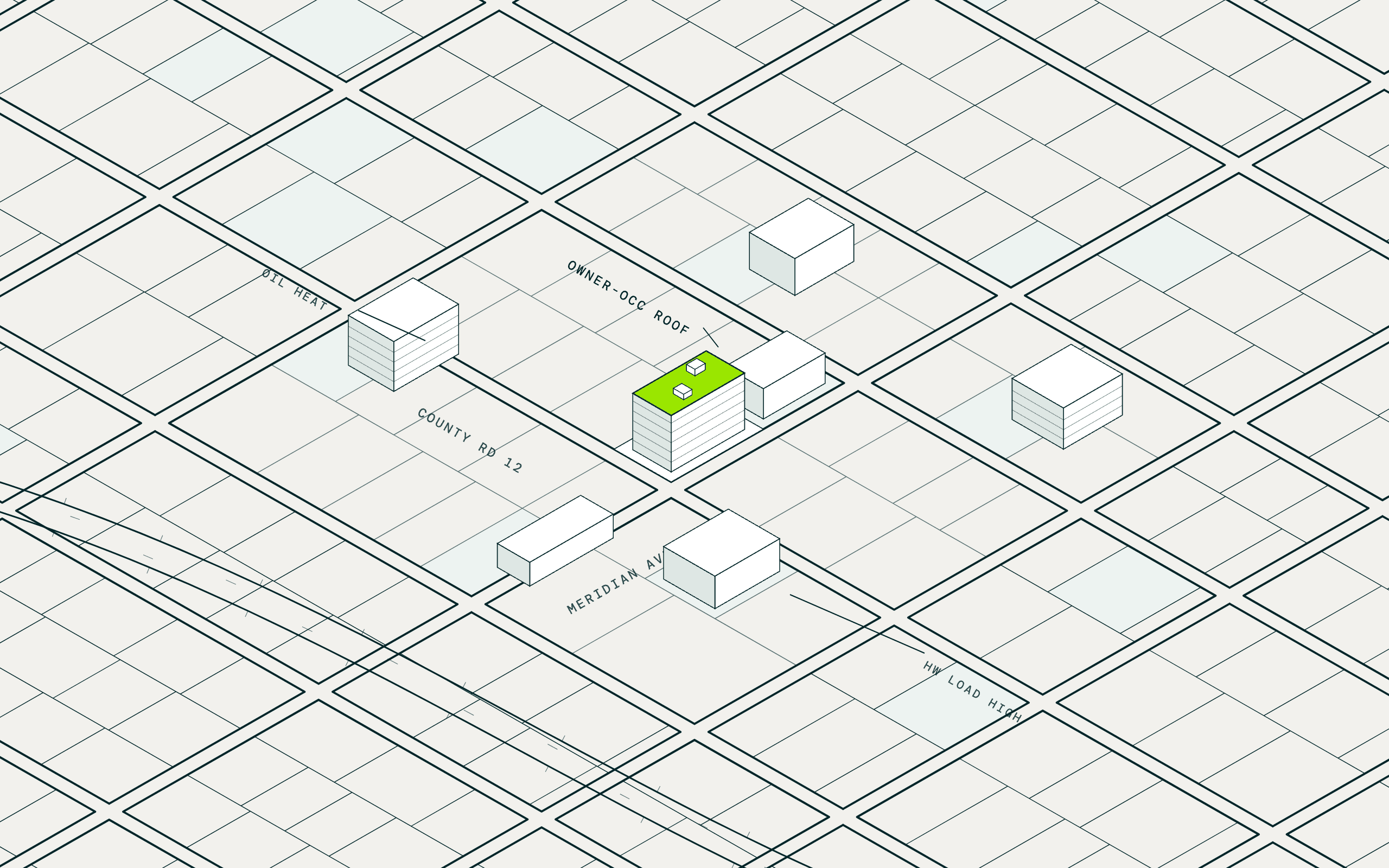
How it works
Pull the buy box
Parcel records supply unit count, year built, last sale, and owner, so a city's multifamily stock filters to your band in one pass. For development, zoning, future land use, and adjacency find the assemblages.
Read the market
Renter share, income, vacancy, and growth land on each parcel from census records, and workplace jobs show where demand sits. Submarket rents and rent rules are researched for the shortlist.
Resolve the owner and the mailer
Corporate filings pierce the LLC to the person, and the mailing address is checked against parcel records so the letter reaches a home. Owners are grouped by portfolio, with phone and email where available.
The parcel export, the skip-trace subscription, and the assistant's research hours.
Questions teams like yours ask MAIA
Asked in plain language. Answered across every parcel in your territory at once.
Which buildings fit our buy box?
Unit count, year built, and last sale come from parcel records, so a filter like 2 to 50 units, built before 2000, runs across every parcel in the county.
Who is the person behind the LLC, and where do they live?
State filings drop the lawyers and registered agents, and a skip trace returns the decision maker's phone, email, and home address. The address is checked against parcel records first.
Which owners hold a portfolio, and which are mom-and-pop?
Every parcel is grouped by its resolved owner, so the name holding fifteen buildings and the name holding one sort apart, each with its own outreach.
Which parcels could carry a new project?
Zoning and future land use mark the parcels that allow density, and adjacency finds the 10 to 25 acre assemblages. Wetlands and flood records drop the wet ones.
Where does demand support new units?
Renter share, income, vacancy, and household growth from census records, plus workplace jobs, are joined to each parcel rather than the tract. Submarket rents are researched for the finalists.
Which sites are in rent control, or on a path to rezone?
Rent-control rules are researched per shortlisted site, not assumed for a whole city. Where a future land use map exists, sites planned for more density than today's zoning are flagged.
The data underneath
Every result carries the record it came from, so the analysis is cited and defensible.
| Screen for | Dataset | Source |
|---|---|---|
| Building and units | Unit count, year built, lot size, and building coverage | County assessor and property records; building footprints and heights |
| Ownership and tenure | Owner of record, last sale date and price, and years held | County assessor and property records |
| Zoning and land use | Zoning code and future land use where the jurisdiction publishes it | County assessor and property records; cited web research |
| Site constraints | Flood zones, wetlands, and slope at the parcel | FEMA, National Wetlands Inventory, and EPA records; USGS terrain data |
| Renter demand | Renter share, household income, vacancy, growth, and workplace jobs around each parcel | Census and workforce records |
| Rents and rent rules | Submarket rents and rent-control status, researched per shortlist | Cited web research |
| Owner and mailing address | LLC resolution, residential mailing address, phone, and email | Cited web research; multi-source contact intelligence |
Finding the Owners and Mailing Addresses Behind 11,000 Apartment Properties
VP of Acquisitions, Los Angeles-area multifamily developer and syndicator · San Gabriel Valley, Los Angeles County · August 26, 2026
What they knew
A Los Angeles-area real estate firm founded in 2018 develops and syndicates multifamily projects in the San Gabriel Valley, with a pipeline of more than 600 units. Its VP of Acquisitions buys two-to-fifty-unit buildings the same way: export the owners from a mapping service, hand the list to an assistant to vet every mailing address in a skip-trace database, then mail 3,000 letters a month. The assessor's address is often a registered agent or a PO box, and vetting one took thirty seconds to ten minutes. He wanted the twenty-to-fifty-unit owners who still pick up.
What they asked
Find every 2 to 50 unit multifamily building in these San Gabriel Valley cities, and for each owner give me the person behind the LLC and the home address the letter should go to.
What MAIA did
Pulled the buy box from parcel records
Unit count, year built, last sale, and owner came from assessor records, so every two-to-fifty-unit building in the target cities landed in one table without a road-by-road export.
Pierced the LLC to the person
MAIA found the ownership record, read state filings to drop lawyers and registered agents, ranked the likely decision maker, and ran a skip trace for a phone and email.
Verified the home address against the county
The residential address from the skip trace was checked against parcel records before it was written to the row, so the letter goes to a house, not a mailbox.
What came back
- 11,000 multifamily parcels across the San Gabriel Valley in one pull, filtered to 2 to 50 units, the year built, and no sale in the last two years
- Owner contacts on nearly all of a 4,000-parcel batch, with about 20 coming back unavailable, and each residential address checked against county records before it hit the row
- 100 rows checked head to head against the assistant's vetted list: an exact match on 15, and on most of the rest MAIA had the current decision maker where the vetted list had a retired CEO or a former leasing manager
What they did next
Three thousand letters a month go out on the list, and the VP is on the phone, 150 calls a week, calling ten percent pickups a win. His assistant has stopped researching and started managing the data, and the pull repeats city by city as the team works outward from the valley. Orange County is next, a market where he knows fewer of the big players and the same pull will tell him who they are.
MAIA had the right house. That's close enough, still a good hit. We pay someone to manually check this for us right now.
More stories from this industry

Acquisitions & roll-ups
Find every target that fits the buy box, on the market or not

Demand forecasting
Score every parcel for where demand goes next

Affordable housing
Find the sites that score before the market does

Battery storage
Find BESS sites worth taking into interconnection

Commercial & industrial solar
Find commercial solar sales opportunities in a market